Endoscopic skull base surgery is a minimally invasive approach to remove tumours of the brain in a way to minimize patient discomfort and manipulation of the brain. These procedures are performed with neurosurgeons using endoscopes (i.e. lighted telescopes) through your nostrils.
This handout gives you information about what to expect after surgery.
If you have more questions after reading this, please speak to Dr. Yip’s team.
Follow-up After Surgery
- For routine surgery, the nasal passageway is filled with dissolvable packing, and plastic splints are sutured in the front of the nose.
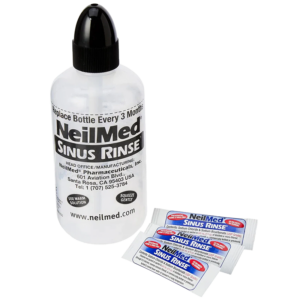
- While in hospital, you will be given a saline nasal spray to use four times per day. When you return home, switch to a nasal saline rinse (ex. Neilmed Sinus Rinse) four times a day.
- Your first post-operative visit is typically within 2 weeks after surgery. At this appointment, your plastic splints and nasal packing will be removed, and your nose will be checked to see how it is healing. Please make sure to take a painkiller (i.e. Tylenol, etc.) 30 minutes prior to this appointment.
- Following the first post-operative appointment, you will be instructed to use a saline rinse 3-4 times per day.
- Dr. Yip will notify you of your second appointment and will likely be 1-3 months after the first post-operative visit.
Recovery from Surgery
Typically, it will take 6-8 weeks for your nose to heal completely. It is common to have a headache after surgery, which may last a few weeks. Nasal congestion, fullness, facial pain, and disrupted sleep are also normal for the first 1-2 weeks and are an expected part of the healing process. These symptoms will improve after the first office visit.
Activity
- Do not perform strenuous activity/exercise for 4-6 weeks after surgery.
- Do not lift, pull or push more than 5 lbs for 4-6 weeks after surgery.
- Do not bend at the waist for 4-6 weeks after surgery. If you need to pick up something from the floor, be sure to bend your knees. This will help to reduce pressure in your head.
- You should limit your activity to walking and climbing stairs. Slowly progress your physical activity as you can tolerate.
- Consider sleeping with your head of bed elevated (30 to 45 degrees) for 1-2 weeks.
- You must receive clearance from your medical team before returning to work, driving a car, or flying.
Diet
- Resume the type of diet you had prior to surgery. Eating a well-balance and healthy diet will help with proper wound healing.
- If you are a diabetic, it is important to control your blood sugar levels.
- There are no restrictions to your diet after surgery
Medications
- You may be given a prescription for antibiotics to help prevent infection. It is important to complete the entire course as instructed.
- Do not take blood thinners, aspirin or ibuprofen (such as Advil, Motrin, Aleve) until Dr. Yip says it is safe to take.
- Do not take high doses of Vitamin E (over 400 IU) or herbal products, such as gingko bilboa, ginseng, or garlic. These can increase your risk of bleeding.
- Resume all other home medications as instructed on your discharge summary.
Pain Control
- Most patients do not need strong pain medications and often will have mild pain that is manageable with acetaminophen (i.e. Extra-Strength Tylenol).
- You may also be given a prescription for stronger pain medication (ex. Opioids). This should only be used, as needed, if you have breakthrough pain with acetaminophen.
- Opioids should be stopped as soon as possible to prevent rebound headaches and prevent addiction.
- Do not drive, operate machinery or perform any dangerous activities if you are taking narcotic medications.
Prevent Constipation
- It is very important to prevent constipation after surgery. Straining to have a bowel movement may increase your risk of a cerebrospinal (CSF) fluid (i.e. brain fluid) leak after surgery.
- To prevent constipation, you should:
- Remain active
- Drink clear fluids
- Eat plenty of vegetables and high-fibre foods
- Take stool softeners, if necessary. If you need an additional laxative, there are many over-the-counter options. Follow the package directions or talk with your local pharmacist if you have questions.
Nasal Symptoms (ex. Discharge, Bleeding, Smell)
- It is common to have mild discharge and bleeding after surgery. Consider using a “drip pad” or piece of gauze under your nose. Remove and replace this dressing as needed.
- You can expect to have drainage from the front and back of your nose.
- If you have experienced a mild nosebleed after surgery, consider using a nasal decongestant (ex. otrivin) and hold pressure (squeeze your nose) for 15 minutes. This can be performed for up to three times a day. Do not use nasal decongestant for more than 3 days.
- Nasal congestion, discharge and crusting can last several weeks to months following surgery but will diminish over time. To reduce it, consider using a bedside humidifier and performing steam showers.
- Your sense of smell will be diminished for several weeks.
Wound Care
- Do not blow your nose for 4 weeks.
- Sneeze with your mouth open for 4 weeks.
- If you use a CPAP machine, discuss with Dr. Yip on when to resume use.
- You may consider applying polysporin ointment (over the counter) to the nostrils if they feel sore/raw. If you choose to do so, apply it twice a day for only 7-10 days.
- You may shower or bathe when you return home. Do not immerse head underwater.
Call your doctor and/or go to the Emergency Room if you are experiencing any of these symptoms:
- Clear fluid draining from your nose, especially when bending your head forward. This may be a CSF (i.e. brain fluid) leak.
- Severe, persistent headache that may be exacerbated when sitting upright and better when lying down.
- Excessive bleeding from the nose or mouth that will not stop after 15-20 minutes.
- Onset of increased drowsiness, confusion, and/or neck stiffness.
- Onset or worsening of vision, including blurring, double vision and loss of peripheral vision.
- Nausea and vomiting that keeps you from eating.
- New or increased frequency of seizures.
- Increased thirst and urination.
- Shortness of breath, chest pain, one-sided leg pain or swelling.
- For life threatening emergencies that cannot wait, proceed directly to the Emergency Room.
Contact Information
- During business hours, contact my surgical coordinator, Jaimi Workun, at 825-540-3545 Ext. 4 or jaimi.workun@ahs.ca. Or if Jaimi is away, please contact her counterpart, Jessalynne Pelletier-Emmons, at 825-540-3545 Ext. 3 + Opt 3 or jessalynne.pelletier-emmons@ahs.ca.
- In case of emergency, report to your nearest emergency room or call 911.